In years past, I’ve treated the 50 days leading up to Pentecost as my training on-ramp to the JFK 50-mile march.
Although my general training protocol is flexible and year-round (life as training for the march, and the march as training for life), I also embrace seasonality in exercise.
Summer is swimming.
Winter is for building burn piles.
And Springtime is for “rucking” with a 5-gallon backpack, spraying poison oak with broadleaf herbicide.
As the preacher says in Ecclesiastes, “To everything there is a season, and a time to every purpose under the heaven.”
This year, I’m starting my preparation later than usual – it’s almost exactly 50 days to July 4, 2026, and I intend to celebrate the nation’s 250th birthday (or perhaps the day before) with one of its oldest physical traditions.
These next 7 weeks will determine whether I finish this year’s 4th of July march with Kennedy-an vigor, or limp across the finish line (if I manage to finish at all).
For years I’ve meant to formalize my ill-defined training protocol into something more concrete: a practical 50-day program that weaves my core philosophy of fitness with the forgotten history and tradition around the JFK50.
As important as the physical training is, the story might be an even bigger piece in the puzzle of our national decline – and the path to a revival.
When you look at footage or read writings from Kennedy’s era, or even more starkly from Roosevelt’s, you get the sense that we have lost something in the impatient push for progress. It is hard to put my finger on it, but I will call it substance.
It is the difference between a typewriter and a Chromebook; a handwritten letter and an email or text message; a home-baked apple pie and the cheap fast-food substitute.
The de-substantiation of society is everywhere and goes by many names: Zygmunt Bauman’s liquid modernity, Girard’s crisis of undifferentiation, and Cory Doctorow’s ens***tification.
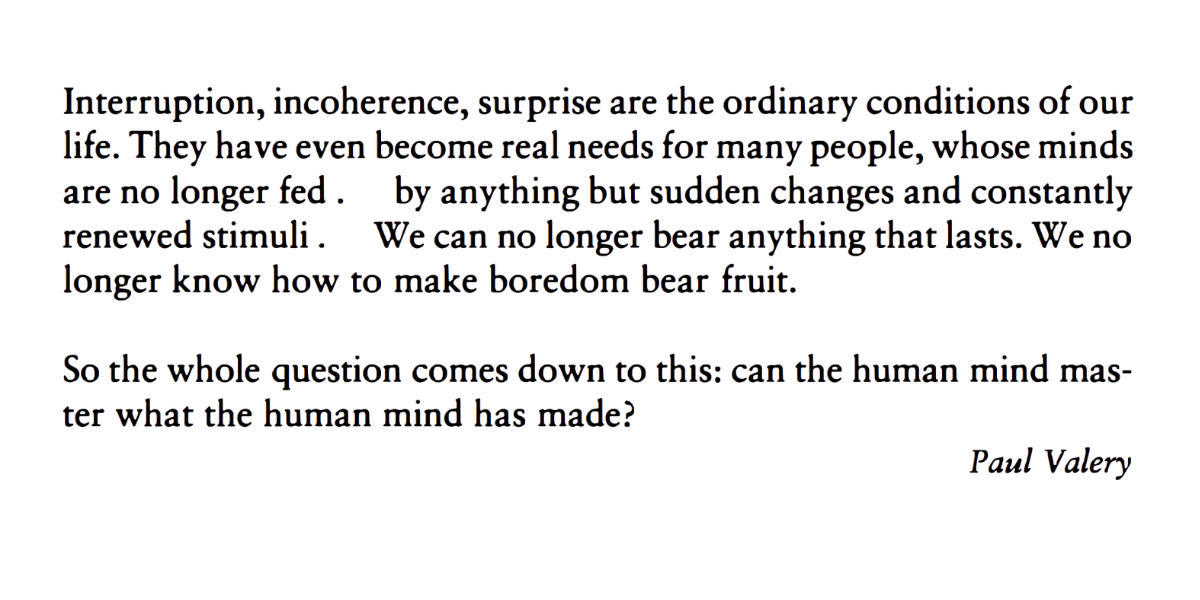
Today I want to take a break from writing about AI to get back to this Substack’s original ethos – the revival of physical culture as a source of substance and antidote to the over-abstraction and harriedness of the agentic era.
Let’s begin with an impromptu podcast I did a couple of weeks ago with my old friend and college dorm mate Josh Weil, on stretching as a vital form of bodily maintenance.
You can watch or read the full transcript here:
It’s taken me embarrassingly long to publish this. The demands of life have forced me to postpone my pet projects and prospective podcasts.
So here I am, indoors on a beautiful Saturday afternoon, hellbent on hitting publish before another week passes.
For the past 10 years or so, Josh has integrated a movement practice into his life and work in a way that I admire. After college, he found himself working long hours at an economics consulting firm that supplied expert testimony in big intellectual property cases between tech giants like Apple and Samsung. The money was good but the substance was lacking.
It was around then that he discovered the work of Bob Cooley and his resistance stretching practice. Josh wound up working with Bob and is now part of a core group that carries the modality forward, training new practitioners and seeing clients of his own.
“Like a Porsche or a nice BMW, you need maintenance. And that’s where stretching comes in.” – Josh Weil, joshweilflexibility.com
Josh told me that he recently used Claude Code to build the entire front and backend of his new website - joshuaflexibility.com. I think this is a prime example of how I hope people will use the new tools to advance real-world embodied practice. AI might be about to replace a lot of entry-level consultants, but it is not about to teach you how to stretch (at least not well).
This is the optimistic version of the bargain with AI: that the computers do all the computer stuff, so the humans can do the human stuff. We can free up our time to move our bodies, work with our hands, and pass on embodied knowledge that cannot be reduced to text on a screen.
I admire Josh for the way he embodies his values.
He took a bodily discipline that helped him recover from the standard professional-class arrangement - long hours, desk posture, chronic pain, vague dissatisfaction - and turned it into a practice that helps other people inhabit their own bodies with more intelligence and poise.
Rather than just talking about stretching, we went through a live demo. And rather than trying to impose a narrow modality on me, Josh started by asking about my goals, and then suggested a few correctives to the movements and stretches I already do.
I think this is a much-needed rejoinder to the “no pain, no gain” mentality that has infected health and fitness, and I admonish you to find some movement modality that allows you to joyfully inhabit your body. If you want to learn to inhabit your body more intelligently and with less pain, you should consider getting in touch with Josh.
My Evolving Stance on AI
If you’ve been following my posts over the last few months, you might not be clear on where I stand on AI. At times, it might seem that I am obsessed to an unhealthy degree, and am putting too much stock in its capabilities.
At other times, I might seem to denigrate it to an unhealthy degree (which can also invest it with more power than it deserves).
I hope it’s clear that I am using this outlet as a venue for criticism – or perhaps more accurately, warning about what might happen if we fail to integrate AI wisely into our lives.
In The Mark of the Sacred, a French philosopher Jean-Pierre Dupuy refers to this as the Jonah Paradox – the strange task of speaking about the catastrophe as if it were already accomplished, precisely in the hope of deferring it.
It’s been a few weeks since I wrote about Simon Willison’s beautiful and honest confession that managing too many AI agents is making him tired.
As with much of my writing on Substack, I wrote that piece for myself more than anyone else to highlight the physical toll of “agentic knowledge work” in the hopes it will force a reassessment, and ultimately a recovery.
The same is true of the 50 mile march, and my writing about it. I do it to hold myself accountable – as well as to clarify and codify principles that I know to be true (but do not always follow).
As Willison noted, the current state is unsustainable. Which means that, by definition, it can’t continue.
But there are two ways for an unsustainable activity to cease: One is through eventual submission, after hitting rock bottom. The other is a crisis averted through an awakening or voluntary surrender.
I hope to achieve the latter, and have taken recourse to the wisdom of the 12 steps – given how plain addictive AI can be when you get into a flow state or unlock some new capability.
I have admitted that I am powerless over the dopamine drip of running four agents in parallel, and that my workflows have become unmanageable.
I have come to believe that a power greater than myself can restore me to sanity.
And I’ve made a decision to turn my work and my will over to a power larger than the next model release (yes, even larger than you, Mythos).
But recognizing the problem is one thing; implementing a solution in a sustainable and integrated way is another. These new tools are here to stay, and AI with its present (impressive) capabilities is the worst it will ever be. Assuming it will continue to get better at things like coding and knowledge work, the opportunity we have is to embrace the productivity gains and restructure our lives so that the time they free up is spent purposefully - not just managing more agents.
Life as Athletic Event
One of the recurring themes of this Substack has been the Athlete of Life.
The Athlete of Life adopts the discipline of a world-class sports competitor. But instead of optimizing for performance on a highly specific dimension – like speed, or skill at maneuvering a ball – he trains for the more general demands of his particular vocation.

My influences are many: from St. Paul to Georges Hebert. But perhaps the sci-fi author Robert Heinlein captured the concept best:
“A human being should be able to change a diaper, plan an invasion, butcher a hog, conn a ship, design a building, write a sonnet, balance accounts, build a wall, set a bone, comfort the dying, take orders, give orders, cooperate, act alone, solve equations, analyze a new problem, pitch manure, program a computer, cook a tasty meal, fight efficiently, die gallantly. Specialization is for insects.“
I’m batting maybe 13 for 21 on this rubric. Thanks to AI, I’m closer to being able to say I can “program a computer,” and thanks to Mrs. Pigwig, who recently gave birth to 8 healthy piglets, I’ll have more a lot hog butchering opportunities in about 7-9 months.
What’s great about Heinlein’s rubric is that no one can achieve full humanity until after they die.
The Athlete of Life is my name for embodied excellence – that of well-rounded personhood; not explicitly spiritual except insofar as spirit is inherently married to the incarnational. As a Christian, I profess God incarnate – the deity who took on the weakness of human flesh in order to elevate it to the status of divinity.
The mystery of the incarnation is far too lofty a subject for a mere blog. Maybe someday I’ll write a book about my understanding of it. But for now I want to focus on this narrower concept as outlined by St. Paul of the Athlete of Life:
“Do you not know that the runners in the stadium all run in the race, but only one wins the prize? Run so as to win.
Every athlete exercises discipline in every way. They do it to win a perishable crown, but we an imperishable one.
Thus I do not run aimlessly; I do not fight as if I were shadowboxing.
No, I drive my body and train it, for fear that, after having preached to others, I myself should be disqualified.”
If we reconceive of life as an endurance athletic event, we might approach the problem of our persistent bad habits differently.
Instead of vague resolutions to stop doing things we know are bad for us and start doing more things that are good for us, we focus on shifting our identity to the kind of person who naturally avoids what hinders him and indulges what advances him in the pursuit of a good and beautiful life.
Exercise, in this framing, is not some siloed compartment. It is something to be integrated into the daily rhythm as bodily maintenance. It is better for exercise to be treated as rejuvenative and preparatory rather than punitive – a penance for the sin of overeating.
I recently heard about this study by Ellen Langer and Alia Crum where they looked at hotel room attendants whose work was already physically demanding. One group was told that cleaning rooms counted as meaningful exercise and satisfied public-health recommendations; the control group was not. Four weeks later, without reported changes in behavior, the informed group saw improvements in measures like weight, blood pressure, body fat, waist-to-hip ratio, and BMI.
How we frame our ordinary activity matters. Properly understood, our chores should form the bulk of our training. My goal in these 50 days is not to carve out more time for dedicated strength training or mobility work. Most of the difference will come from my overall targets for productive activities like poison oak eradication and building or moving electric fences.
Along with this, I’ve set an ambitious goal for volume: 1,000,000 steps over 50 days, or an average of 20,000 steps per day. Considering that the march itself is around 100,000 steps, that knocks the daily average down to 18,000. This is a lot, but it’s all time well spent. Health benefits aside, walking provides the space to hear yourself think and refocus your priorities.
Werner Herzog once said, “The World reveals itself to those who travel on foot.”
I cannot count the number of times I have gone outside to move – checking on the cows, milking, taking out the trash – and felt, in the middle of that movement, the most clarity I have had all day.
This is not to say there is no place for dedicated workouts. But I have come to embrace a very targeted approach with these. Most weeks, if you don’t count stretching or daily chores, I probably spend less than an hour on actual dedicated “exercise.” Something I learned from Pavel Tsatsouline is that while it takes time and effort to build a baseline of strength, once that baseline is established, maintenance is easy.
I have one “non-negotiable” – a weekly 3-mile run that begins with trucking the trashcan up the steep driveway backwards, following the knees-over-toes “reverse sled” protocol. Within that run, I usually do one or two all-out sprints.
Beyond this, my philosophy on exercise has really not evolved all that much since I first discovered Paleo and Mark Sisson’s advice to “move frequently at a slow pace” as the ultimate primal movement.
Most beneficial health practices are negations of bad habits, like giving up our addictions, or not staying up so late looking at screens.
Speaking of which… I should really go to bed.
Stay tuned for more information about this year’s Semiquincentennial march. If you want to join the JFK50 challenge, see if you can ramp up to averaging 15-20,000 steps a day. Make good use of those steps, doing something purposeful. And don’t forget to stretch. In the end, that’s really all the preparation you need for the march, or for life.